If you’ve been hearing about SEO, AEO, and GEO, it can sound like your business needs three separate online marketing plans. It doesn’t.
These terms describe different ways people may find and use information online. The practical work behind them overlaps. For most small businesses, the best place to start is still a clear, helpful website that search engines can access and people can trust.
What do SEO, AEO, and GEO mean?
SEO: Help people find your pages in search
SEO, or search engine optimization, is the work of making your website easier for search engines to discover, understand, and show in search results.
That includes having useful pages, clear headings, accurate business details, and a site that works well on mobile. Local businesses may also need to keep their profiles and contact details consistent across the web.
SEO is not a promise of a particular position in Google. It is a way to make your website more understandable and useful to both search engines and potential customers.
Our guide to website SEO basics walks through the practical starting points.
AEO: Make a useful answer easy to find
AEO, or answer engine optimization, means presenting information so that a search tool or assistant can find and provide a direct answer to a question.
If you’re asking what is AEO optimization, think about the questions customers already ask. A clinic might explain how to book an appointment. A restaurant might clearly state its hours and menu options. A salon might describe what a service includes and who it is for.
The answer should be easy to find on the page, written in clear language, and supported by relevant detail. Headings that reflect real customer questions can help readers scan the page. Short answers can help, too, but they should not replace the context customers need.

GEO: Make your information easier for AI systems to use
GEO, or generative engine optimization, refers to making your business information more understandable and useful to generative AI tools. These systems may combine information from different sources to create a response, sometimes with links to sources.
If you’re wondering what is GEO optimization, a plain-English answer is: make it easier for AI systems to identify your business, understand what it offers, and verify its key details.
That means stating clearly what your organization does, who it serves, and where it operates. It also means keeping facts accurate and consistent across your website and relevant public profiles.
There is no single, universally agreed GEO checklist. And no website change guarantees that an AI tool will cite or recommend your business.

How AI search changed the picture
Traditional search often presents a list of links. People choose a result and visit a website to find what they need.
AI search can work differently. An assistant may summarize information into a response, then provide links to some of the sources it used. That can change how a customer finds an answer, but it does not mean Google Search or business websites have become irrelevant. Customers may use a search engine, an AI assistant, or both.
Many of the same fundamentals still matter. For example, Google’s guidance on AI features in Search points site owners back to foundational search practices. There is no special AI markup that guarantees a place in AI-generated answers.
For a closer look at whether your site’s information is accessible and clear, read “Your Website Looks Great. But Can AI Actually Read It?”. Our article on how to get your business recommended by ChatGPT covers practical steps, with the same important caveat: no steps guarantee a recommendation.
The tactics overlap more than the labels suggest
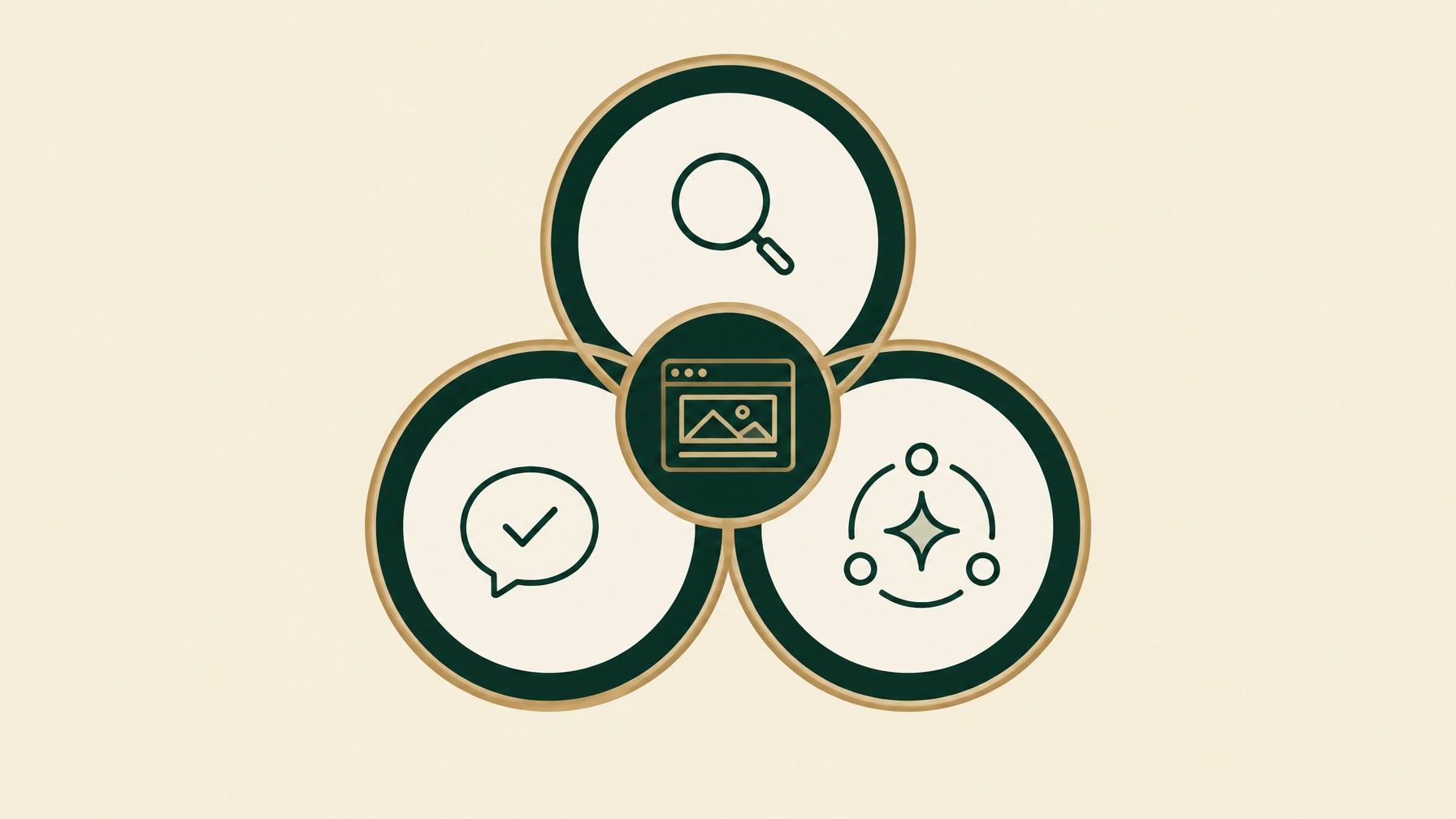
Here’s the simplest way to think about SEO vs AEO vs GEO:
- SEO helps search systems find and understand your pages.
- AEO helps them find a clear response to a question.
- GEO helps generative systems understand your business and use its information in an answer.
In practice, one well-written page can support all three. Imagine a real estate agency page that clearly explains the areas it serves, the people it helps, and how to get in touch. Search engines can understand the page’s subject. A customer can find an answer to “Where does this agency work?” And an AI tool may have a clearer source to consult when responding to a related question.
That page benefits from shared foundations:
- Crawlability: Important pages should be accessible to search systems.
- Clear content: Explain your services and business details in straightforward language.
- Consistent facts: Keep your business name, hours, location, services, and contact information accurate.
- Useful structure: Use descriptive page titles, headings, links, and organized content.
- Structured data where appropriate: This can help describe information on a page, but it does not guarantee rankings or AI mentions.
- Real trust signals: Provide useful details and keep relevant public profiles current.

Where should a small business spend its time?
For most small businesses, the answer is not “choose SEO, AEO, or GEO.” It is “strengthen the shared foundations first.”
If your website does not clearly explain what you do, start by improving the core pages. If customers can’t find your hours, service area, booking details, or contact information, make those details easier to locate. If your business information differs across your website and public profiles, review and update it.
Then add useful answers to real customer questions. You do not need to publish a large volume of content. A helpful page about a common service, a clear FAQ, or a detailed explanation of how to book may be more useful than several rushed articles.
Examples of clear business information might include:
- A clinic explaining its services, appointment process, and location.
- A salon describing its treatments, booking options, and policies.
- A restaurant keeping its menu, hours, and location details up to date.
- A nonprofit explaining its programs and the community it serves.
- A club or association setting out membership, events, and contact information.
The right content depends on what your customers need to know. Keep it accurate, specific, and easy to read.
If you’re considering AI search optimization for small businesses, treat it as part of good website and content maintenance, not as a separate set of tricks. “Do You Really Need a Website If People Ask AI Instead of Google?” explains why a clear website remains useful even as search habits change.
A practical order of operations
You can approach the work in a manageable sequence:
- Check your core pages. Make sure they explain what you offer, who you serve, where you operate, and how to contact you.
- Review access and usability. Confirm your important pages can be reached and that the site works well on a phone.
- Make business details consistent. Check your website and the public listings that matter to your organization.
- Answer customer questions. Add clear explanations where they help customers make a decision.
- Review and update. Keep service descriptions, hours, policies, and other important facts current.
This is not a guarantee of higher rankings or AI recommendations. It is a sensible way to make your business easier to understand online, wherever a customer begins their search.
Want to know what to improve first?
The terms can be useful, but you do not need to chase three separate strategies. Start with the basics that support SEO, AEO, and GEO together: accessible pages, clear content, accurate facts, and helpful answers.
If you would like a structured review, First Look Web Co.’s AI Search Visibility Audit costs $49. It provides a readiness score from 0 to 100 across seven categories and lists your top five improvements, prioritized by impact. The audit measures readiness. It does not predict rankings or guarantee that an AI tool will recommend your business.
You can use the findings to decide what to address now and what can wait. The goal is a stronger, clearer foundation, not another acronym to chase.