Do You Really Need a Website If People Ask AI Instead of Google?
First Look Web Co. · November 1, 2026
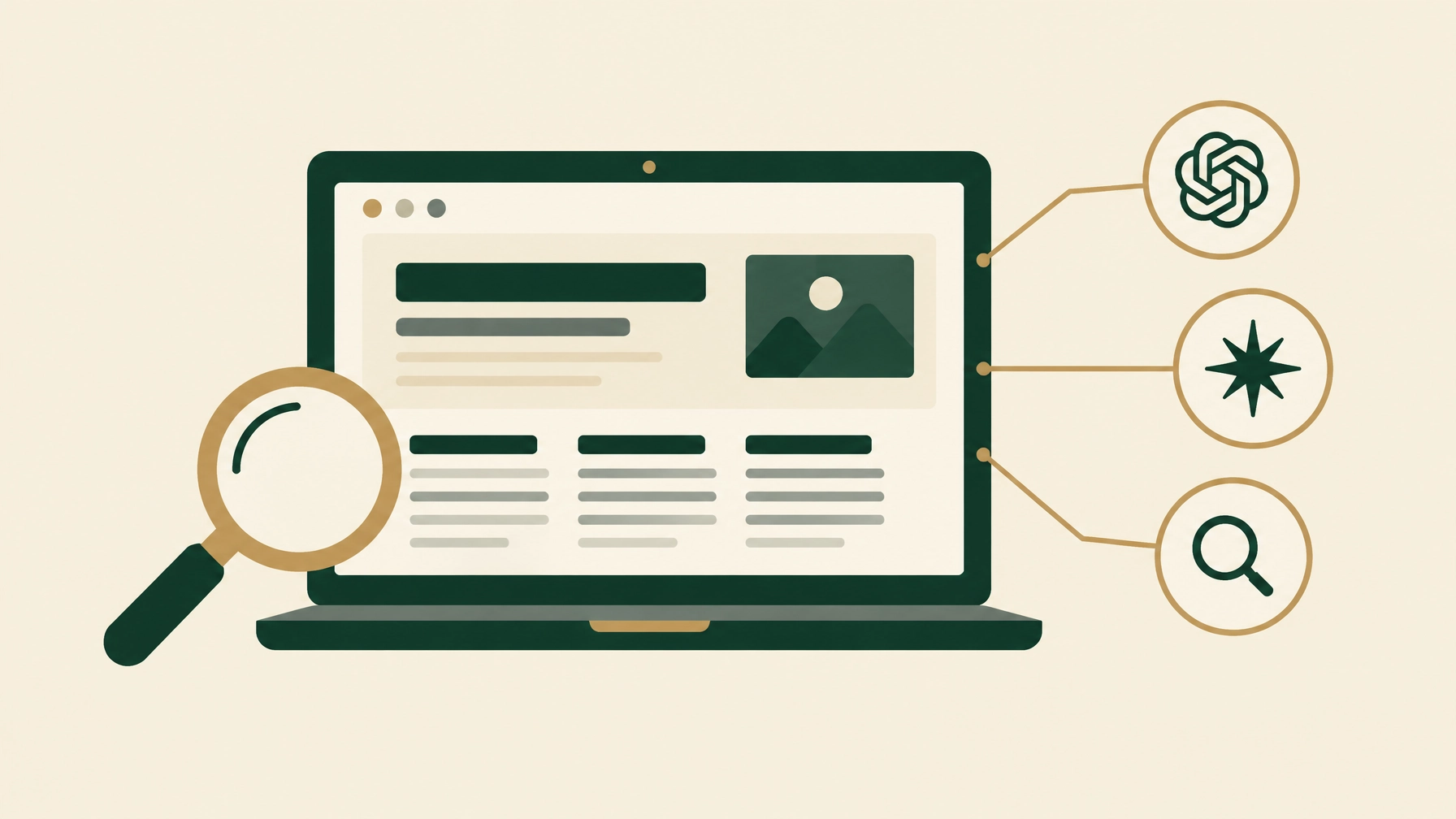
Yes. People may discover your business through ChatGPT, Gemini, or another AI assistant, but they still need reliable information before deciding to contact you. Your website gives you a place to explain what you do, confirm important details, and help a potential customer take the next step.
AI search has changed how some people look for answers. It has not made a clear, useful website unnecessary.
AI search and Google search use different experiences, not entirely different information
With traditional Google search, you usually see a list of links and choose which ones to visit. With an AI assistant, you may get a written answer that summarizes information from websites and other sources. Some AI search experiences also link to sources so you can check the details yourself.
The exact process varies by tool. Google explains that its AI search features use relevant pages from its Search index. ChatGPT can use web search to find current information. Business profiles, local listings, reviews, and other online references may also help establish what a business does and whether its details are consistent.
That means there is no single trick for how to show up in AI search results. An assistant may consider several sources, and no website change can guarantee a mention or recommendation.
Your site still matters because it is a source you control. It can describe your services, location, hours, booking options, and policies in your own words. Google’s guidance for AI features emphasizes the continuing value of clear technical foundations and useful content. OpenAI also explains how OAI-SearchBot helps surface websites in ChatGPT Search.
Your website helps AI understand what your business offers
An assistant can only describe your business accurately if it can find clear, current information about it. A listing might show your name and phone number. A review might mention a particular service. Your website can bring together the fuller picture:
- The services or products you offer
- Who you serve and where you operate
- Current hours, policies, and pricing information where appropriate
- How to book, make an inquiry, visit, or get involved
Think of your website as your first-party reference, not the only source an AI system will use. Keeping its information specific and consistent with your public profiles makes it easier for people and search tools to check the details.
For example, a clinic can explain the care it provides and how patients request an appointment. A restaurant can publish its menu, hours, location, and reservation details. A nonprofit or association can describe its programs, membership, events, and contact information.
A short, clear explanation is more useful than a broad slogan that leaves people guessing. “We offer skincare treatments and online appointment requests” tells a visitor more than “Helping you look and feel your best.”

AI recommendations still lead people to verify your business
A recommendation is often the start of a decision, not the end of it. Before calling, booking, or visiting, people may open your website to check:
- Whether you offer the service they need
- Your current hours, prices, and location
- Your qualifications, approach, or policies
- Whether booking or contacting you is straightforward
If the information is missing or difficult to find, a prospective customer may hesitate or move on to another option. A website gives you room to answer those questions directly rather than relying on a short profile or a summary written elsewhere.
This matters across different kinds of organizations. A prospective client may want to understand a consultant’s services before getting in touch. Someone considering a skincare appointment may want to compare treatments and see how to book. A homebuyer may check a real estate team’s local experience and contact options. A tennis association member may be looking for membership details, events, or schedules.
You can see examples of different business needs in the First Look Web Co. portfolio, including Jonicki Consulting, Skincare by Gabrielle, People 1st Realty, and Kerrville Tennis. Each organization benefits from making its purpose and next steps easy to understand.

What happens if your website is weak or missing?
AI tools may still find information about a business through listings, reviews, or other websites. But if your online details are sparse, outdated, or inconsistent, an assistant may have less reliable information to work with. It may not be able to explain your services clearly, or it may use another business with more complete and consistent information as its recommendation.
A missing website can also leave customers without a dependable place to verify details. Social profiles and directory listings can help people discover you, but their layouts and available information vary. Your website is where you can organize the details that matter and direct visitors toward booking, calling, donating, joining, or making an inquiry.
If you are wondering, “Is my website visible to AI?” remember that visibility is not just about whether a search crawler can access a page. It also depends on whether the page gives a useful and accurate account of your business. Being accessible does not guarantee a citation, but being hard to access or understand can make your site less useful as a source.
What your website needs in 2026
A website that serves both people and AI readers does not need complicated tricks. Start with the fundamentals:
- Make key pages accessible. Important pages should load without a login or error and should not be unintentionally blocked from search crawlers. OpenAI’s crawler documentation explains that OAI-SearchBot controls access for ChatGPT Search. It is separate from GPTBot, which relates to model training.
- Explain your services in plain language. Use clear headings and dedicated pages for your main services, locations, or programs. Include the practical details a customer needs to decide whether you are a good fit.
- Keep business facts consistent. Check your website, Google Business Profile, and relevant directories for the same business name, address, phone number, hours, and website link. Update them when something changes.
- Make the next step easy on a phone. Your contact information, booking links, menus, forms, and other key actions should be easy to find and use on a mobile screen.
- Support your claims with useful trust details. Include accurate information about your experience, staff, policies, credentials, or community work where relevant. Encourage honest reviews and keep your public profiles current.
- Use structured data where it fits. Structured data can help search systems interpret details such as business type and hours. It should match the information people can see on the page. It can support understanding, but it does not guarantee a search result or recommendation.
These steps are practical AI search optimization for small businesses because they improve clarity for customers as well as search systems. For a closer look at the crawlability basics, read “Your Website Looks Great. But Can AI Actually Read It?”. For more steps on building a stronger online presence, see “How to Get Your Business Recommended by ChatGPT (5 Steps That Actually Work)”.
A website is still part of how customers choose you
You do not need to choose between Google and AI. Customers may use both, along with maps, reviews, referrals, and social media. A clear website supports the whole journey: discovery, verification, and action.
If you want to know what may be getting in the way, First Look Web Co.’s AI Search Visibility Audit costs $49. It gives you a readiness score from 0 to 100 across seven categories, along with your top five improvements prioritized by impact.
The audit measures website readiness. It does not predict rankings or guarantee that an AI assistant will recommend your business. It is a practical way to see what to address first.

A professional website does not have to be complicated. It needs to explain your business accurately, answer the questions customers bring, and make it easy to take the next step. That remains useful whether someone finds you through Google, an AI assistant, or a recommendation from a friend.