
DIY Website vs Professional Website: What's Right for Your Business?
First Look Web Co. · August 1, 2026
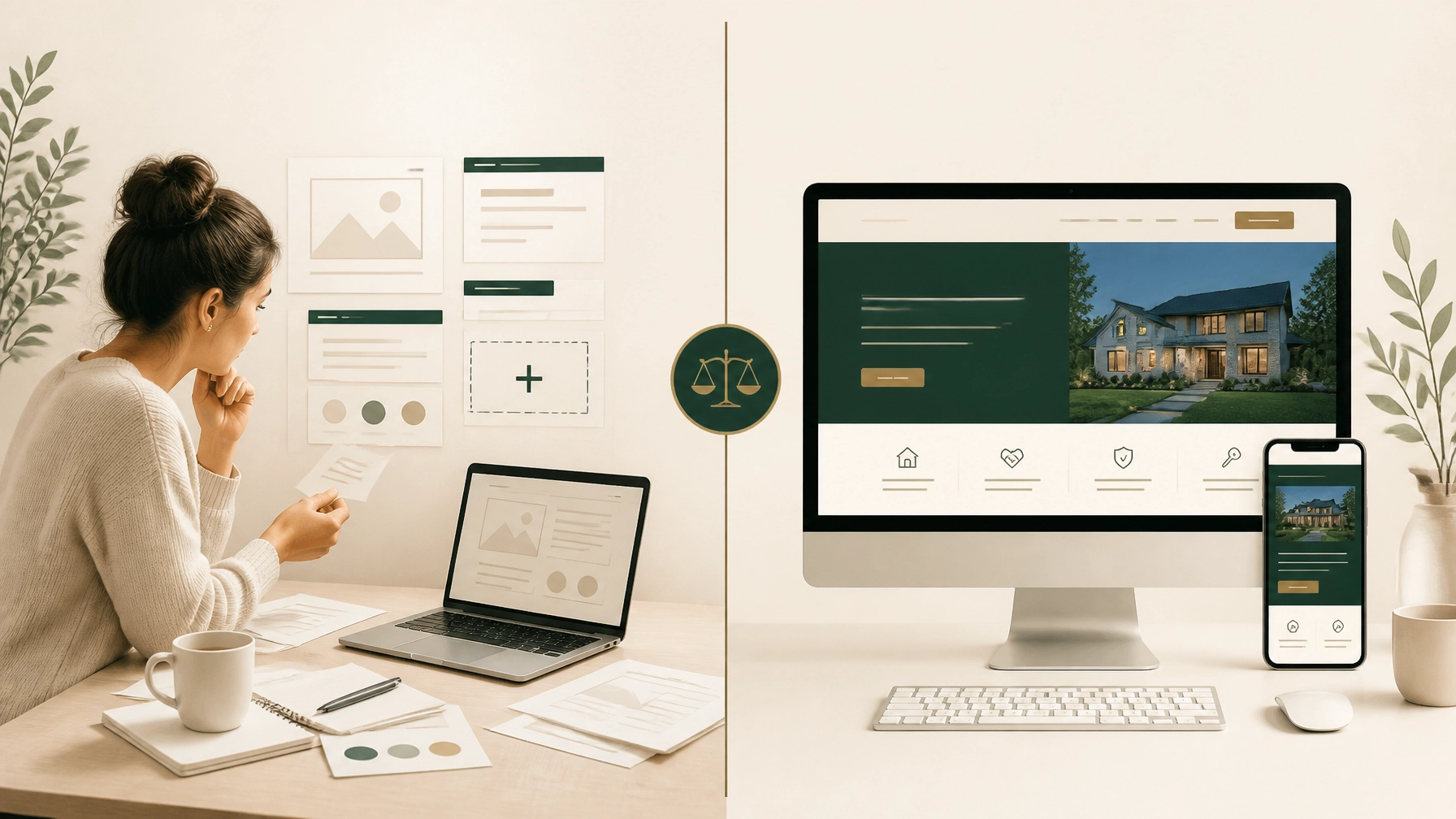
If you’re starting or growing a small business, you’ve probably asked yourself whether you should build your website yourself or hire someone to do it.
A DIY website builder can seem like the obvious choice. You can choose a template, add your information, and get something online without a large upfront payment. For some businesses, that’s exactly the right approach.
For others, the website needs to do more. It needs to build trust, explain services clearly, bring in inquiries, and represent the quality of the business behind it. In that case, working with a professional website design company may save time and create a stronger foundation.
The right choice depends on your budget, your available time, and how important your website is to your business.
The short answer
A DIY website may be right if:
- You need a simple online presence quickly.
- Your budget is very limited.
- You’re comfortable learning a new platform.
- Your website isn’t a major source of leads or sales.
- You have time to manage design, content, SEO, and troubleshooting.
A professional website may be the better fit if:
- Customers find you through Google.
- Your website needs to generate calls, bookings, or inquiries.
- You want a polished site that reflects your brand.
- You don’t have time to build and maintain the site yourself.
- You need help with copywriting, structure, mobile design, or basic SEO.
Neither option is automatically better. The important question is whether the website will support your business or simply exist online.
What a DIY website includes
DIY website builders such as Wix, Squarespace, and similar platforms make it possible to build a site without writing code.
You usually pay a monthly platform fee, choose a template, and customize the pages yourself. Many platforms include hosting, basic SEO controls, contact forms, and mobile layouts.
The advantages are straightforward:
- Lower upfront cost: You may be able to launch for the cost of a domain and a monthly subscription.
- Direct control: You can change text, photos, and hours whenever you want.
- Fast setup: A simple site can be published in a few days if you already have your content ready.
- Good fit for basic needs: A short-term landing page or simple brochure site may not require custom development.
The tradeoff is that you’re responsible for nearly every part of the process. That includes choosing the structure, writing the content, selecting images, making the layout work on mobile devices, and checking that forms and links function correctly.
A basic site can be easy to start. A clear, professional site often takes more time than expected.
The real cost of DIY
The price of a website builder doesn’t always reflect the full cost of building the website.
You’ll also spend time:
- Comparing templates.
- Learning the platform.
- Writing and editing page content.
- Resizing and choosing images.
- Adjusting layouts for phones and tablets.
- Setting up page titles and descriptions.
- Troubleshooting forms, buttons, and spacing.
- Revisiting the site when something no longer works as expected.
For a business owner, that time has value. Even if the platform costs only a few hundred dollars per year, the project may take evenings, weekends, or time away from customers and personal time.
DIY can still be a sensible choice. It’s often practical when you’re testing an idea, launching a temporary site, or working with a very limited budget. Just make sure you’re measuring both money and time.
What a professional website provides
A professional website is more than a set of pages assembled from a template. The goal is to create a clear path for visitors.
A professional website design company can help with:
- Page structure and navigation.
- Brand-aligned visual design.
- Clear service descriptions.
- Calls to action that encourage contact.
- Mobile responsiveness.
- Basic on-page SEO.
- Contact forms and location information.
- Image selection and layout.
- Launch checks and technical setup.
The work is collaborative, but you don’t have to figure out every design decision alone. You provide the facts, preferences, photos if you have them, and business details. The designer helps shape those materials into a site that’s easier for customers to understand and use.
That distinction matters for service businesses. A visitor should quickly know what you offer, who you help, where you’re located, and how to take the next step.
A professional website should fit the business
A professional website for small business doesn’t need to be oversized or complicated.
A contractor may need service pages, service areas, project photos, and an inquiry form. A clinic may need information about treatments, location details, and appointment instructions. A realtor may need team information, local expertise, and clear buyer or seller contact options.
The best structure depends on the business.
A smaller website can be effective when each page has a clear purpose. More pages aren’t automatically better. Clear information is what helps visitors make decisions.
DIY vs professional: a practical comparison
A professional build costs more because you’re paying for expertise, decision-making, execution, and accountability. You’re also paying to avoid spending dozens of hours learning a system that isn’t part of your core work.
How much does professional web design cost?
There isn’t one universal price. Cost depends on the number of pages, the amount of custom work, the content required, and whether the site includes specialized features.
At First Look Web Co., the standard website build is designed for small businesses and organizations that need a professional online presence without traditional agency pricing.
The current options are:
- $1,250 for a private standard website.
- $1,000 with the $250 portfolio participation discount.
- $250 deposit to begin and reserve production time.
- First 12 months of hosting included.
- $199 per year for hosting after the first year.
The standard build includes up to five custom-designed core pages, mobile responsiveness, basic on-page SEO, professional copywriting and content assistance, contact and lead inquiry forms, social links, Google Maps integration when appropriate, basic accessibility considerations, and launch checks.
It also includes two standard revision rounds, with a third allowed just in case.
That defined scope keeps the price and timeline clear. Larger websites, membership portals, advanced booking systems, custom applications, and complex integrations are quoted separately.
You can review the full website pricing and standard services before deciding whether the approach fits your needs.
Professional design does not have to feel complicated
One concern many business owners have is that hiring a professional will create a long, expensive process.
That can happen with some agencies. It doesn’t have to happen with a clearly scoped small business website.
The First Look process is organized into five steps:
- Discovery: Discuss your business, customers, and website goals.
- Deposit and materials: Provide your logo, photos, hours, services, and key facts.
- Design and build: The site is designed, written, and built.
- Review and revisions: Review the site and provide one consolidated list of changes per round.
- Launch: Pay the remaining balance, connect your domain, and publish the site.
Typical turnaround is 5–10 business days after the needed materials and information are received.
That timeline depends on timely feedback and complete information. It also applies to the standard scope, not a large custom project.
Look at the work, not just the promise
If you’re considering a professional web design company, review its actual work.
Look for sites that:
- Explain a business clearly.
- Work well on mobile devices.
- Use readable layouts and useful navigation.
- Make contact details easy to find.
- Feel appropriate for the industry.
- Avoid unnecessary visual clutter.
First Look’s portfolio includes websites for professional services, salons and personal services, real estate, and community organizations.
The styles differ because the businesses differ. A professional site should be shaped around the audience and the work: not forced into one visual formula.
A hybrid option may work, too
You don’t have to choose between doing everything yourself and handing over every decision.
Some business owners choose a hybrid approach:
- Hire a professional to build the initial site.
- Make simple content updates themselves.
- Bring in help for larger changes or new pages.
- Add ongoing content support only when it becomes useful.
This can provide a strong foundation while keeping day-to-day control in your hands.
At First Look, optional ongoing content and marketing support is available for $349 per month. It includes two SEO-oriented blog posts per week, social media content creation and scheduling on specified accounts, and monthly website updates when needed. It’s optional, not required.
Which choice is right for you?
Choose DIY if you have the time, your needs are simple, and a basic online presence is enough for now.
Choose professional web design if your site is important to how customers find, evaluate, and contact your business. You’ll likely benefit from outside help when the cost of your time, unclear messaging, or a weak first impression is greater than the project price.
The right professional website doesn’t need to be excessive. It needs to be clear, credible, usable, and easy for your customers to act on.
If you’re unsure where your project fits, contact First Look Web Co.. You can share what you need, and we’ll let you know whether the standard build is appropriate or whether your project should be quoted separately.